
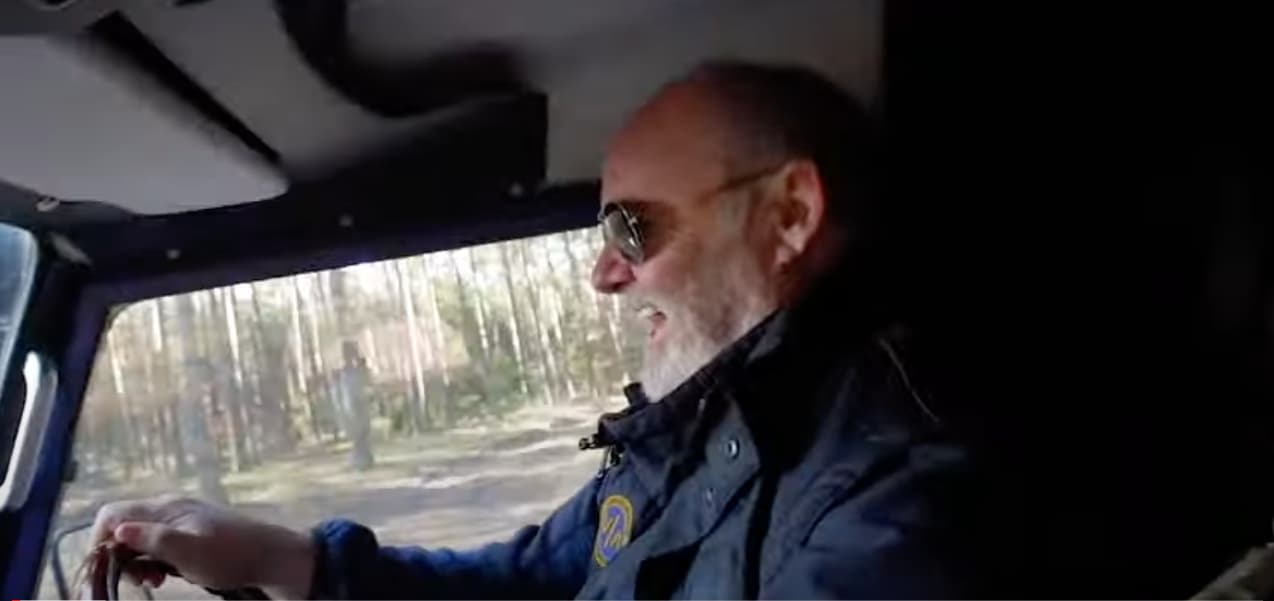
The journey from the depths of post-traumatic stress disorder to the heights of post-traumatic growth is neither linear nor guaranteed. Yet for Billy MacLeod MBE, founder of Veterans in Action, this transformation stands as a powerful example of how adversity can become the catalyst for profound personal development and meaningful service to others. His story illuminates a path many veterans struggle to find, one that leads not merely to recovery, but to genuine flourishing.
Billy MacLeod’s military journey began at the remarkably young age of 16 years and 5 days when he joined the Junior Leaders Regiment Royal Engineers in 1977. As the youngest Junior Sapper in the Royal Engineers at that time, Billy entered an environment that would shape his character, instil discipline, and forge friendships that felt unbreakable.
The Junior Leaders programme was one of the British Army’s most intensive training regimens, designed to develop not just soldiers, but future leaders. These young men underwent rigorous military training, education, and leadership development over a compressed timeframe. Billy grew up in a stable, hard-working family in a tough area of Glasgow and had always wanted to join the military from a young age. It was what he aspired to do. The structured military environment provided the opportunities and experiences he sought.
His service with the Royal Engineers took him across various operational and non-operational tours, primarily in Northern Ireland during the height of the Troubles. He also served in Belize and Germany, experiencing the diverse challenges that Royal Engineers face as they support military operations worldwide. The Royal Engineers’ motto, “Ubique” (everywhere), proved prophetic for Billy’s service, as sappers deployed wherever the British Army needed engineering support.
However, at age 21, Billy’s promising military career took an unexpected turn. A devastating knee injury, a cruciate ligament tear with cartilage damage, fundamentally altered his trajectory. The army’s medical treatment approach at the time was rudimentary compared to today’s standards. It consisted of two weeks in hospital followed by a return to full duty after two weeks’ leave, with no physiotherapy or rehabilitation programme. This inadequate treatment meant Billy’s knee progressively deteriorated with each subsequent operational tour.
The compounding effects of his injury, combined with what Billy describes as personal immaturity and subsequent disciplinary issues, led to his military career ending after nine years, far shorter than the full career he had envisioned. In an era before mobile phones and social media, leaving the military meant an abrupt severance from his support network.
“I walked through the camp gate for the last time, and I had at least 200 friends, then suddenly, they were gone,” Billy reflects. This sudden isolation represents one of the most challenging aspects of military transition, the loss of the structured community that had defined daily life for nearly a decade.
Billy’s transition to civilian life exemplified many of the classic challenges veterans face. Without a clear plan or understanding of the civilian world, he initially took whatever employment he could find, including a parcel delivery service. He then established a taxi business with his family, which he ran for 20 years, demonstrating his entrepreneurial capabilities and work ethic.
Yet beneath this external success, Billy was struggling profoundly. He describes being “angry all the time” and deeply unhappy with his life, experiencing depression whilst keeping his emotional turmoil hidden from others. This internal struggle manifested in “bursts of rage” that created significant strain on his family relationships, though they steadfastly supported him through this difficult period.
Billy’s first attempt to address his mental health challenges through traditional therapy proved unsuccessful. After being referred to a psychologist, he attended only two sessions. Either unprepared for the therapeutic process or finding it incompatible with his personality and needs, Billy told the therapist he felt “great” at the second session and was subsequently discharged from treatment.
This experience highlights a crucial issue in veteran mental healthcare. The one-size-fits-all approach often fails to address the complex needs of military personnel. Billy’s struggle with conventional therapy is echoed by many veterans. Traditional therapeutic models may not resonate with individuals accustomed to action-oriented, peer-supported environments.
Standing outside the therapist’s office with his wife, Billy faced a pivotal moment, “What do I do now?” This question would ultimately lead to his breakthrough, but through an entirely different path than conventional treatment models suggested.
Billy’s transformation began with a crucial realisation, “I looked back to when I was happiest, and it was my time in the army. I wanted to do something to help veterans who were feeling just like me.” This insight marked a turning point for Billy. Rather than dwelling on what he had lost, he began focusing on how his experience could benefit others facing similar struggles.
His initial approach to veteran support involved reaching out to established charities, but this proved frustrating. Met with negativity when offering his services to large veteran organisations, Billy began conducting his own research into the military charity sector. What he discovered was a gap between what veterans needed and what existing services provided.
Billy’s research led him beyond the UK to examine international approaches to veteran support. In Australia, he discovered the work of Dr Simon Crisp, who had developed Wilderness and Adventure Therapy programmes for young people. This discovery would become the foundation for what eventually became Veterans in Action and their ALIVE programme.
Whilst still running his taxi company, Billy founded what was initially known as Veterans International Aid, later renamed Veterans in Action. The organisation’s approach differed fundamentally from traditional therapy models, focusing instead on practical, hands-on activities designed to rebuild confidence, self-esteem, and self-belief.
The first major undertaking for the charity was the 1,200-mile John O’Groats to Land’s End Walk, which at first was devised to raise funds. Twelve veterans took part, with others joining the route to walk alongside. Billy organised the walk so that two veterans walked together each day, with six pairs on the move at the same time. The day was split into six stages, with each pair supported by two vehicles, who dropped them off and picked them up at their start and finish points.
This format gave veterans the opportunity to talk with each other while walking between 10 to 15 miles each day. It encouraged them to share their stories, speaking openly about their mental health, what had worked and what hadn’t. The following day, each veteran would walk with a different colleague, until, in time, everyone had paired up with everyone else.
This openness continued in the evenings as the group rested, having now heard every participant’s story. As the walk unfolded, Billy saw a remarkable change in the veterans through the natural process of walking and talking, himself included. It was during this walk that Billy realised the power of this approach and made the decision to plan the Union Flag Walks. When completed, these would form the pattern of the Union Flag across the map of the UK.
Then, in 2016, Billy’s life nearly ended. He was struck with chronic pancreatitis, spent five months in hospital, and was not expected to live. In that time, Billy read extensively about Post-Traumatic Growth (PTG). The more he read, the more he recognised what Veterans in Action had already been doing, creating growth out of trauma, but in a practical, hands-on way rather than as a clinical theory.
That realisation gave Billy a renewed sense of purpose. It convinced him that not only was he on the right path with Veterans in Action, but that PTG was the framework that could explain, validate, and strengthen everything they were building. He believes this discovery helped him survive. Fighting to live had meaning because there was still work to be done.
Veterans in Action developed the ALIVE Programme based on Billy’s research into Wilderness and Adventure Therapy, adapted specifically for veterans’ needs. The programme’s name serves as an acronym representing five key elements designed to foster post-traumatic growth:
Achieve: Veterans are encouraged to accomplish things beyond their expectations, rebuilding the sense of achievement that military service once provided. The programme recognises that service personnel are accustomed to achieving remarkable results, and civilian life can diminish this sense of accomplishment.
Learn: Participants acquire new skills through practical projects, from Land Rover mechanics to expedition planning. This learning occurs in peer-supported environments that mirror military training dynamics, whilst addressing civilian applications.
Inspire: Veterans develop their ability to motivate and support others, reconnecting with leadership skills that may have been dormant since leaving service. The programme emphasises how veterans can provide structure and stimulus to those around them.
Value: Participants rediscover their sense of worth and purpose through meaningful activities, whether expedition participation or humanitarian aid delivery. This element directly addresses the loss of identity and purpose many veterans experience.
Experience: Veterans apply their military skills and knowledge in positive ways, recognising that their background provides valuable experience that can benefit others and society broadly.
In 2017, Veterans in Action expanded their programme to include Land Rover restoration projects. This addition proved particularly significant, as Billy describes it, “We were rebuilding people through the process of building Land Rovers.” This approach recognises that PTSD often causes individuals to retreat progressively, first from society, then to their homes, then to a single room, and finally into their own minds. The rebuilding process, both mechanical and personal, provides a pathway back to engagement.
The Land Rover projects serve multiple purposes beyond mechanical restoration. They provide structured environments for peer interaction, opportunities to apply problem-solving skills, and tangible evidence of progress and achievement. Completed vehicles then support expedition activities and humanitarian aid delivery, creating additional layers of purpose and meaning.
Veterans in Action’s work extends beyond individual veteran support to broader humanitarian efforts. During the COVID-19 pandemic, the organisation played a crucial role in delivering essential supplies to vulnerable populations across the UK. Their humanitarian work has expanded internationally, including medical aid delivery to Ukraine following the Russian invasion.
Billy’s MBE, awarded in the Queen’s 2020 Birthday Honours, recognised both his veteran support work and his organisation’s pandemic response efforts. This recognition validates the approach of combining personal recovery with service to others, a model creating multiple benefits simultaneously.
Billy’s approach challenges conventional assumptions about veteran mental health treatment. His belief is that medication and therapy are both important, but that simply medicating until veterans feel nothing prevents them from meaningfully engaging in therapy and finding purpose. In the UK, there is a tendency to medicate first and keep medicating until the individual becomes numb, and only then introduce therapy. However, Billy’s view is that, to truly benefit from therapy, veterans must be able to feel and process their emotions. If medication has dulled all feeling, how can real progress be achieved in therapy?
Furthermore, he feels that therapy done in isolation can be problematic. If a veteran completes therapy and simply returns to the same life and routines as before, the issues can persist unchanged. Billy believes activity is vital, not only before and during therapy, but also after, providing a sense of purpose and continued engagement. It is this combination of activity, purpose, and connection that underpins sustainable healing.
He also points out that many veterans may not suffer with clinical PTSD, but rather with the loss of importance, identity, and purpose that comes from leaving the structured environment of military life. Supporting veterans must go beyond medication and therapy alone and address these subtle, but fundamental, challenges.
Billy’s pioneering work is a direct reflection of his commitment, standing at the helm as one of the longest-serving charity founders in the military sector. For close to 18 years, he has worked directly with veterans and personally devised every aspect of the programmes in use today. For Billy, this work is not just a job, it is a life’s purpose, rooted in experience and driven by conviction.
Billy’s transformation has created expanding circles of positive impact. Veterans who participate in Veterans in Action programmes often become advocates and supporters themselves, creating a peer-to-peer support network that extends the organisation’s reach. This model recognises that veterans often respond better to support from others who have faced similar challenges.
The organisation’s work has influenced broader conversations about veteran support, demonstrating the effectiveness of non-clinical approaches that emphasise action, peer support, and meaningful engagement rather than traditional therapeutic models alone.
Billy MacLeod’s journey from PTSD to post-traumatic growth offers several crucial insights applicable beyond the veteran community.
The importance of purpose in recovery cannot be overstated. Billy’s transformation began when he shifted focus from his own suffering to how he could help others facing similar challenges. This outward orientation provided the motivation necessary for sustained change.
Peer support often proves more effective than professional intervention alone. Veterans respond to others who have faced similar challenges and understand the unique aspects of military culture and transition.
Practical, hands-on activities can provide more sustainable healing than purely conversational therapies for some individuals. The combination of physical activity, skill development, and tangible achievement addresses multiple aspects of wellbeing simultaneously.
Individual recovery can be enhanced by contributing to something larger than oneself. Billy’s humanitarian work demonstrates how personal healing can be accelerated by engaging in meaningful service to others.
Billy MacLeod’s story continues to evolve. His recent work bringing together British, American, and Israeli veterans for joint expeditions demonstrates his expanding vision for veteran support and international cooperation. These initiatives recognise that the challenges veterans face transcend national boundaries and that sharing approaches to healing can benefit all participants.
His criticism of outdated PTSD treatment approaches and advocacy for activity-based interventions continues to influence discussions about veteran mental health policy. Billy’s work suggests that the future of veteran support may require more diverse, flexible approaches that recognise individual differences in response to trauma and recovery.
Billy MacLeod’s transformation from a struggling veteran battling PTSD to an MBE-awarded charity founder exemplifies the profound possibilities inherent in post-traumatic growth. His journey demonstrates that the most devastating experiences can become the foundation for the most meaningful contributions.
The Veterans in Action model challenges traditional approaches to veteran mental health by emphasising action, peer support, and purpose. Billy’s story suggests that the question “What do I do now?” can become not a cry of desperation but the beginning of a journey towards profound positive change.
Perhaps most significantly, Billy’s experience illustrates that recovery from trauma need not mean simply returning to a previous state of functioning. Instead, post-traumatic growth offers the possibility of developing capabilities, relationships, and purposes that exceed what existed before the traumatic experience occurred.
For veterans struggling with transition challenges, Billy MacLeod’s story provides both hope and a practical model. It demonstrates that the very experiences that create the deepest wounds can also become the source of the greatest strength, not just for individual recovery, but for service to others facing similar struggles.
His transformation reminds us that sometimes the most profound healing occurs not when we focus on ourselves, but when we discover how our struggles can become the foundation for helping others find their own path forward.

I needed focus I needed something to fill my time, well maybe not fill my time but something to focus on like a target, a needed to get back my drive.
I started to help VIA ‘Veterans In Action’ and found something that I could do, use the old skills that I learnt in the army and more since I left which I did not register I had.
I had been missing that motivation to do something that I wanted to do and gain that level of self-gratification and achievement.
Everybody has a skill set, but it’s the motivation to use it we can lose, VIA have various projects on the go all the time, hopefully I have found my niche to help them and myself to gain personal gratification by being a member of a team again and a job well done.
After discussions I realised that it’s this which advances my mental well-being and my ongoing fight against depression and the feeling of worthlessness.
I have woken up, helping hand in hand with fellow soldiers suffering from labelled disorders finding strength from weakness, realising what helps them generally does helps me, the recognition has been an awakening.”
Ian ‘Chalky’ White former 17th/21st Lancers and B Sqn 22 SAS
Veterans In Action have been filming our expeditions for many years for our YouTube Channel, Veterans Expeditions Overland, and through this experience of not only running the expeditions but also capturing footage that enables veterans who have taken part in a place of reference to recapture how they felt by taking part.
The Veterans In Focus project enables veterans to learn new skills and record not only the expeditions we run but also the day-to-day work on all projects connecting them all together so everyone feels involved in all aspects of the work we do.
VIA take a long-term approach to helping veterans who suffer to enable them to grow within a project working alongside their peers. All this can be achieved within this project which can be ongoing and would allow veterans to learn new skills or to pass on skills learned during their time in the services
Some of the outcomes of the project are a sense of purpose, regaining confidence and working in an environment alongside other veterans where they can instantly feel relaxed, chilled-out, secure, and safe.
Veterans can work at their own pace, stop thinking negatively, concentrate, learn new skills, be part of building something, and most importantly where problems are understood this will positively impact mood and stress levels.
For those involved in the project, they can also get involved on an expedition HERE
I became involved with VIA in 2010 after my life took a turn for the worse and was invited along to do some fundraising with them. This helped me no end and in time my life got back on track. I completed a Union Flag Walk with them from Cape Wrath to Land’s End which again helped as walking and talking with other veterans with similar stories was a great help in understanding how I was feeling. I gained control of my life again.
In 2019, I took part in an overland expedition travelling through the Spanish Pyrenees and whilst away my life took a turn for the worse again due to family problems back in the UK. On my return I had to start again and rebuild and focus on the future and with the help of Veterans In Action I got back on track and took control.
I now own and run my own courier business.
Mark Colman former Royal Engineers
To date, we have travelled 25,000 miles travelling through 30 different countries and some of them several times both on overland expeditions for humanitarian aid through the pandemic and more recently supplying medical humanitarian aid to Ukraine.
It is important to note that to take part in one of our overland expeditions we insist that veterans get involved in the BUILD IT part of the project. The reason for this is part of the Post Traumatic Growth process which is our method for helping veterans so that veterans can grow within a team of their peers, learning new skills and relearning old skill sets that may have been forgotten after service.
Leading up to an expedition involves expedition training which will include off-road driving, navigation, camp setups, camp cooking and daily maintenance, something most veterans will understand from their time in the services.
It would be unfair for any individual to turn up on the day of an expedition who hadn’t previously been involved as everyone else would have been working together over a long period of time so due to the very nature of the mental health problems of those we take out on expedition turning up on day 1 for any individual could become very difficult to find where they fit in no matter how welcoming everyone was.
It is the involvement long-term on building the vehicles that enable veterans to grow that gets them to a place where they fully enjoy all aspects of the expedition experience starting from the minute that an overland expedition sets off.