

When trauma leaves lasting scars, traditional therapy alone isn’t always enough. For veterans struggling with PTSD, depression, and the complex challenges of civilian life, the wait for professional help can be crushing—and even when it arrives, the medicine may dull the very emotions needed for true healing. This is where purpose-driven, hands-on projects step in to bridge a critical gap, offering veterans not just something to do whilst they wait, but a pathway to genuine transformation.
The statistics paint a sobering picture. NHS data reveals that 80% of people waiting for mental health care experience deterioration in their mental health during the wait, with many facing crisis situations or taking time off work. For veterans specifically, the journey to specialist treatment can be even more treacherous. Parliamentary evidence shows some veterans can wait 12–18 months for specialist treatment through NHS Veterans services or Combat Stress, whilst Op COURAGE waiting lists have grown substantially since its launch.
Combat Stress itself reports an average wait time of 12 weeks for specialist treatment, though this varies significantly by region. When you’re struggling with flashbacks, insomnia, and the crushing weight of invisible wounds, 12 weeks can feel like an eternity. For many veterans, this delay isn’t just inconvenient—it’s dangerous.
Recent research by Rethink Mental Illness found that 25% of people whose mental health deteriorated whilst waiting for treatment attempted suicide. The ripple effects extend far beyond individual suffering: one-third of those whose condition worsened took time off work, with some losing their jobs entirely. Veterans, already facing significant challenges transitioning to civilian life, cannot afford to lose three months of their recovery journey to administrative delays.
The irony is that when veterans finally receive treatment, the medication designed to help can sometimes hinder their progress. Studies show that SSRIs and SNRIs—the first-line treatments for PTSD and depression—can lead to emotional blunting or apathy in up to one-third of patients. This pharmaceutical side effect dulls feelings necessary for effective therapy, creating a pharmaceutical catch-22.
Research from Cambridge University found that between 40–60% of patients taking SSRIs experience emotional blunting, described as emotional numbness, indifference, or decreased responsiveness. For veterans already struggling to reconnect with family and friends, this medication-induced emotional detachment can be particularly devastating. A 2019 study found that approximately one-third of patients stopped taking their antidepressant due to emotional blunting, leaving them back at square one.
The challenge is that effective trauma therapy requires emotional engagement. Veterans need to access and process difficult feelings, work through traumatic memories, and rebuild their emotional connections to the world. When medication numbs these very capacities, the therapeutic process becomes significantly more challenging.
Veterans rarely present with PTSD or depression in isolation. The clinical picture is typically surrounded by wider life challenges that compound recovery: debt and financial pressure from career transitions, relationship strain from years of deployment and hypervigilance, housing instability, and unemployment or underemployment as military skills don’t always translate directly to civilian roles.
Research into veteran mental health consistently shows high rates of comorbidity. Combat Stress audits demonstrate that 75% of their clients suffer from chronic PTSD, with 62% also experiencing co-morbid depression and long-term substance misuse. Perhaps most significantly, 92% have been exposed to multiple psychological traumas, and 52% experienced significant childhood trauma prior to enlistment.
This complex presentation means that traditional therapy—sitting in a room talking about feelings—often falls short of addressing the full scope of veterans’ needs. Many veterans give a history of social isolation, repeated relationship failures, frequent periods of homelessness, and a severe feeling of loneliness and disconnection from mainstream society. Some 75% of new clinical cases are unemployed.
The average veteran takes 14.3 years from leaving military service to the point of referral to specialist help. This suggests that for many, the traditional healthcare model simply isn’t accessible, relevant, or appealing enough to engage with until they reach crisis point.
Veterans In Action (VIA) has developed a different approach—one that recognises that progress is lived and reinforced every day, not only in the therapy room. Our model centres on hands-on projects that provide immediate purpose whilst veterans wait for or complement formal treatment.
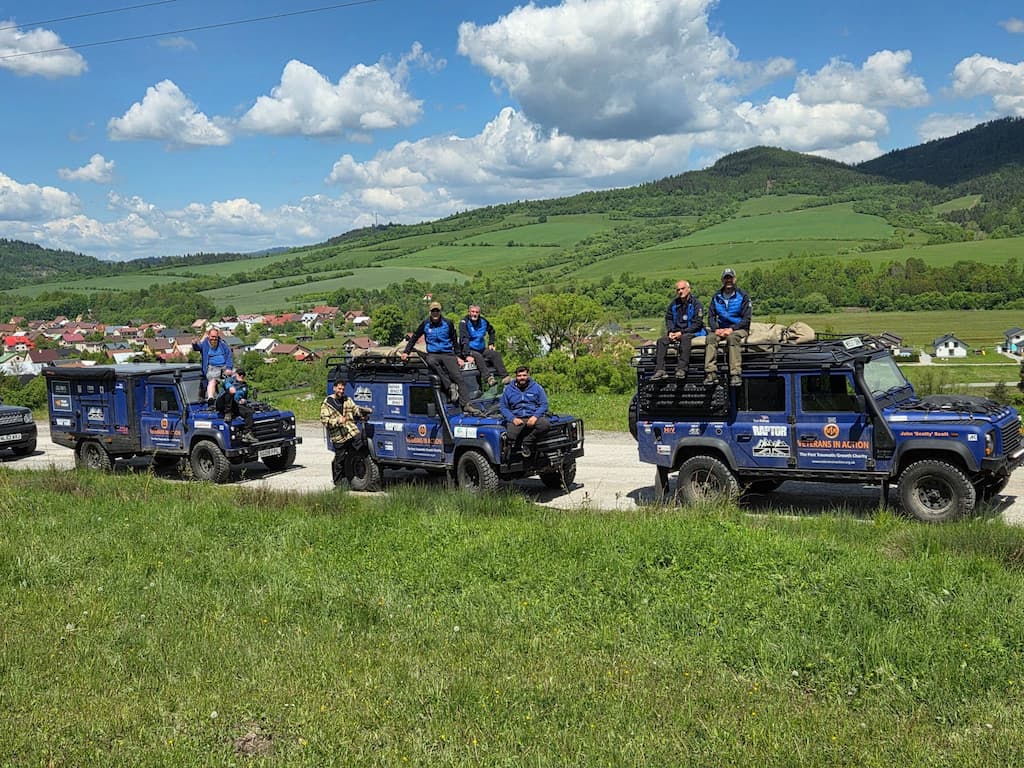
The charity’s vehicle building project exemplifies this philosophy. Veterans strip down, rebuild, and prepare Land Rovers to expedition standard—work that can take months or even years to complete. This isn’t occupational therapy with crafts and colouring books; it’s meaningful, skilled work that produces tangible results. Veterans can see their progress daily as engines come together, bodywork is restored, and vehicles are transformed.
Luke, a veteran involved with similar organisation Dig In, describes the transformation: “Without being melodramatic I was getting towards the end of my rope. Slowly but surely, a purpose started building up again. I could barely speak before. Now I can laugh, joke, and even support others. It stopped me wanting to kill myself… Fast forward three years, I’m on the lowest grade of antidepressants. I’m healthier physically and mentally. My spirit is bubbling now.”
The difference lies in the approach. Rather than waiting to feel better before engaging with life, veterans engage with meaningful work that gradually rebuilds their sense of capability, connection, and purpose. Each day brings visible progress—a skill relearned, a problem solved, a component restored. This creates what psychologists call “mastery experiences” that directly counter the helplessness and incompetence that trauma often instils.
This approach aligns with emerging research on Post-Traumatic Growth (PTG)—the concept that positive psychological changes can emerge from struggling with trauma. Unlike resilience, which is about returning to baseline, PTG involves transformation that leaves individuals stronger than before.
A major study of 184 US military veterans who completed a PTG-oriented training programme found significant increases in growth-related outcomes alongside decreases in PTSD symptoms. Participants reported a 54% increase in post-traumatic growth scores and a 49% decrease in PTSD symptoms. Crucially, these improvements were maintained at 18-month follow-up, suggesting lasting change rather than temporary symptom suppression.
The key elements that facilitate PTG include: meaningful engagement with challenges, peer support from others who understand the experience, the opportunity to help others, development of new skills and capabilities, and connection to something larger than oneself. Hands-on projects like those offered by VIA naturally incorporate all these elements.
Working alongside other veterans provides peer support and reduces isolation—critical factors given that social isolation and loneliness are major predictors of poor outcomes in veteran populations. The shared purpose of building vehicles for expedition use connects individual work to a larger mission. Veterans develop new skills whilst drawing on military experience, creating continuity between past and present identity rather than requiring them to abandon their military selves.
The power of hands-on work extends beyond psychological benefits. There’s something profoundly healing about creating or repairing something physical after trauma has left you feeling broken. Military training emphasises competence, problem-solving, and mission accomplishment—values that civilian therapy doesn’t always honour.
Stephen Reilly, a former Royal Military Police officer involved with VIA, explains: “Many veterans become socially isolated after leaving the Forces and can struggle to adjust to civilian life, this project brings a group of veterans together who support each other, in many different ways and veterans, once more feel a sense of belonging something they often miss once leaving service.”
The work environment matters too. Unlike clinical settings that can feel sterile and pathologising, workshops and build spaces feel familiar to many veterans. The language of mechanical problems, engineering solutions, and practical challenges resonates with military experience. Veterans can use skills from their service whilst developing new ones, creating bridges between military and civilian identity rather than requiring wholesale reinvention.
Research consistently shows that meaningful activity is crucial for mental health recovery. A systematic review of veteran mental health interventions found that programmes emphasising “empowerment through purpose and community” and “building trust” were most effective at reducing isolation and improving outcomes. Traditional therapy, whilst valuable, often lacks these elements.
The benefits of hands-on projects extend far beyond the workshop. Veterans involved in VIA’s programmes report improvements in multiple life domains: renewed relationships with family members, return to employment, reduction in substance use, and decreased reliance on crisis services.
One veteran describes his journey: “I was suffering badly and never believed I would make anything of my life again as I truly didn’t feel capable! I discovered VIA in Feb 2020 and got involved in building the vehicles and I was given a true sense of belonging again… In combination with therapy with TILS and being a member of VIA, I have rediscovered myself… I’ve grown and can happily say that I am now back in full-time employment with a family and a future!”
This testimonial illustrates a crucial point: hands-on projects don’t replace professional therapy but complement it powerfully. The veteran mentions receiving formal treatment through TILS (Transition, Intervention and Liaison Service) whilst simultaneously engaging with VIA’s practical work. The combination proved transformative in ways that either approach alone might not have achieved.
The skills developed also have practical value. Veterans learn or relearn mechanical, electrical, and fabrication skills that can translate into employment opportunities. The confidence built through completing complex projects carries over into job interviews, relationship conversations, and daily challenges. Work that began as therapeutic activity becomes genuine vocational preparation.
Perhaps most importantly, hands-on projects offer something that traditional treatment often cannot: immediate relief from rumination and worry. When you’re focused on diagnosing an engine problem, or fitting bodywork, there’s no mental space for flashbacks or anxiety spirals. The work demands present-moment attention, providing natural respite from traumatic memories.
This isn’t escapism—it’s engagement. Unlike avoidance strategies that temporarily distract from problems, meaningful work builds capacity to handle difficulties. Each challenge overcome in the workshop strengthens problem-solving abilities and emotional regulation skills that transfer to other life domains.
The social aspect cannot be overstated either. Traditional therapy is typically individual, but recovery happens in relationship. Working alongside other veterans creates opportunities for mutual support, shared understanding, and gradual rebuilding of trust. Veterans can support each other through difficult days without formal therapy sessions or crisis interventions.
As one VIA participant notes: “Veterans can work at their own pace, stop thinking negatively, concentrate, learn new skills, be part of building something, and most importantly where problems are understood this will positively impact mood and stress levels.”
The evidence is clear: hands-on projects aren’t just busy work for veterans waiting for “real” treatment. They represent a different pathway to healing—one that honours military values, builds genuine capability, and creates lasting change through purposeful action rather than pharmaceutical intervention alone.
For veterans caught between civilian trauma services that don’t understand military culture and medication that numbs the emotions needed for recovery, projects like those offered by VIA provide a crucial bridge. They offer immediate engagement while formal treatment remains out of reach, complement professional therapy when it becomes available, and continue supporting veterans long after discharge from clinical services.
The transformation isn’t just individual—it’s communal. Veterans working together on meaningful projects create communities of support that extend far beyond workshop hours. They become resources for each other, models of recovery for newly struggling veterans, and advocates for approaches that recognise the full complexity of trauma recovery.
Most importantly, they prove that healing doesn’t always happen in consulting rooms or through prescription bottles. Sometimes it happens with dirty hands, shared tools, and the simple but profound satisfaction of building something that works—starting with yourself.
In a system where veterans can wait months for help while their condition deteriorates, hands-on projects offer hope, purpose, and genuine progress from day one. They remind us that recovery isn’t something that happens to veterans—it’s something veterans actively participate in, one project, one day, one small victory at a time.
For veterans seeking support, VIA can be contacted through their website at veteransinaction.org.uk. Combat Stress provides 24-hour support at 0800 138 1619, and Op COURAGE services can be accessed through the NHS or by calling 0300 373 3332.

I needed focus I needed something to fill my time, well maybe not fill my time but something to focus on like a target, a needed to get back my drive.
I started to help VIA ‘Veterans In Action’ and found something that I could do, use the old skills that I learnt in the army and more since I left which I did not register I had.
I had been missing that motivation to do something that I wanted to do and gain that level of self-gratification and achievement.
Everybody has a skill set, but it’s the motivation to use it we can lose, VIA have various projects on the go all the time, hopefully I have found my niche to help them and myself to gain personal gratification by being a member of a team again and a job well done.
After discussions I realised that it’s this which advances my mental well-being and my ongoing fight against depression and the feeling of worthlessness.
I have woken up, helping hand in hand with fellow soldiers suffering from labelled disorders finding strength from weakness, realising what helps them generally does helps me, the recognition has been an awakening.”
Ian ‘Chalky’ White former 17th/21st Lancers and B Sqn 22 SAS
Veterans In Action have been filming our expeditions for many years for our YouTube Channel, Veterans Expeditions Overland, and through this experience of not only running the expeditions but also capturing footage that enables veterans who have taken part in a place of reference to recapture how they felt by taking part.
The Veterans In Focus project enables veterans to learn new skills and record not only the expeditions we run but also the day-to-day work on all projects connecting them all together so everyone feels involved in all aspects of the work we do.
VIA take a long-term approach to helping veterans who suffer to enable them to grow within a project working alongside their peers. All this can be achieved within this project which can be ongoing and would allow veterans to learn new skills or to pass on skills learned during their time in the services
Some of the outcomes of the project are a sense of purpose, regaining confidence and working in an environment alongside other veterans where they can instantly feel relaxed, chilled-out, secure, and safe.
Veterans can work at their own pace, stop thinking negatively, concentrate, learn new skills, be part of building something, and most importantly where problems are understood this will positively impact mood and stress levels.
For those involved in the project, they can also get involved on an expedition HERE
I became involved with VIA in 2010 after my life took a turn for the worse and was invited along to do some fundraising with them. This helped me no end and in time my life got back on track. I completed a Union Flag Walk with them from Cape Wrath to Land’s End which again helped as walking and talking with other veterans with similar stories was a great help in understanding how I was feeling. I gained control of my life again.
In 2019, I took part in an overland expedition travelling through the Spanish Pyrenees and whilst away my life took a turn for the worse again due to family problems back in the UK. On my return I had to start again and rebuild and focus on the future and with the help of Veterans In Action I got back on track and took control.
I now own and run my own courier business.
Mark Colman former Royal Engineers
To date, we have travelled 25,000 miles travelling through 30 different countries and some of them several times both on overland expeditions for humanitarian aid through the pandemic and more recently supplying medical humanitarian aid to Ukraine.
It is important to note that to take part in one of our overland expeditions we insist that veterans get involved in the BUILD IT part of the project. The reason for this is part of the Post Traumatic Growth process which is our method for helping veterans so that veterans can grow within a team of their peers, learning new skills and relearning old skill sets that may have been forgotten after service.
Leading up to an expedition involves expedition training which will include off-road driving, navigation, camp setups, camp cooking and daily maintenance, something most veterans will understand from their time in the services.
It would be unfair for any individual to turn up on the day of an expedition who hadn’t previously been involved as everyone else would have been working together over a long period of time so due to the very nature of the mental health problems of those we take out on expedition turning up on day 1 for any individual could become very difficult to find where they fit in no matter how welcoming everyone was.
It is the involvement long-term on building the vehicles that enable veterans to grow that gets them to a place where they fully enjoy all aspects of the expedition experience starting from the minute that an overland expedition sets off.